EPS Graduate Students Set Sail Off the Coast of the Pacific Northwest
Departmental News
Posted: Nov 12, 2025 - 12:00am
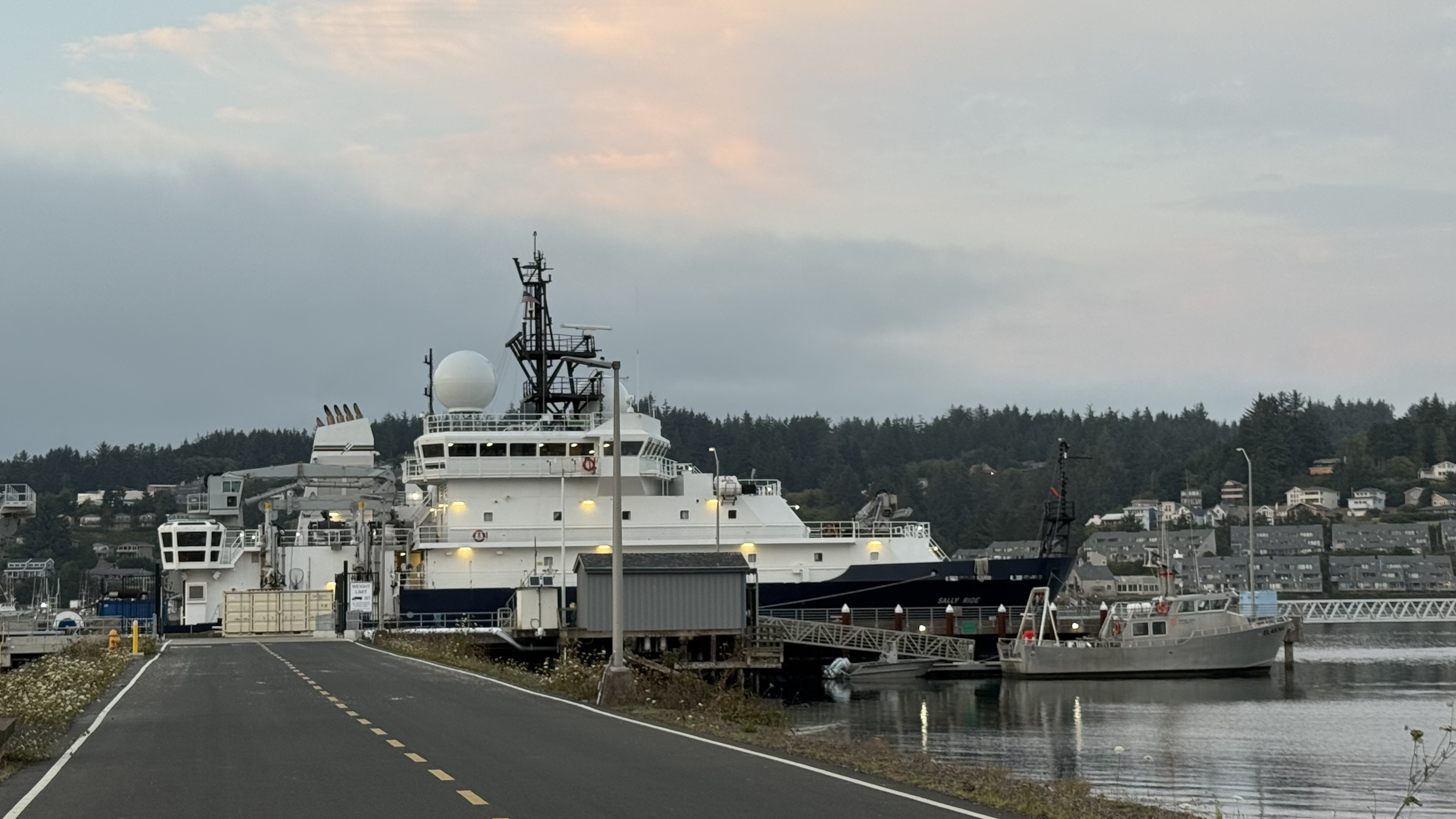
R/V Sally Ride Docked along the coast of Oregon, just prior to embarking. Photo Credit: Maddie Hurd
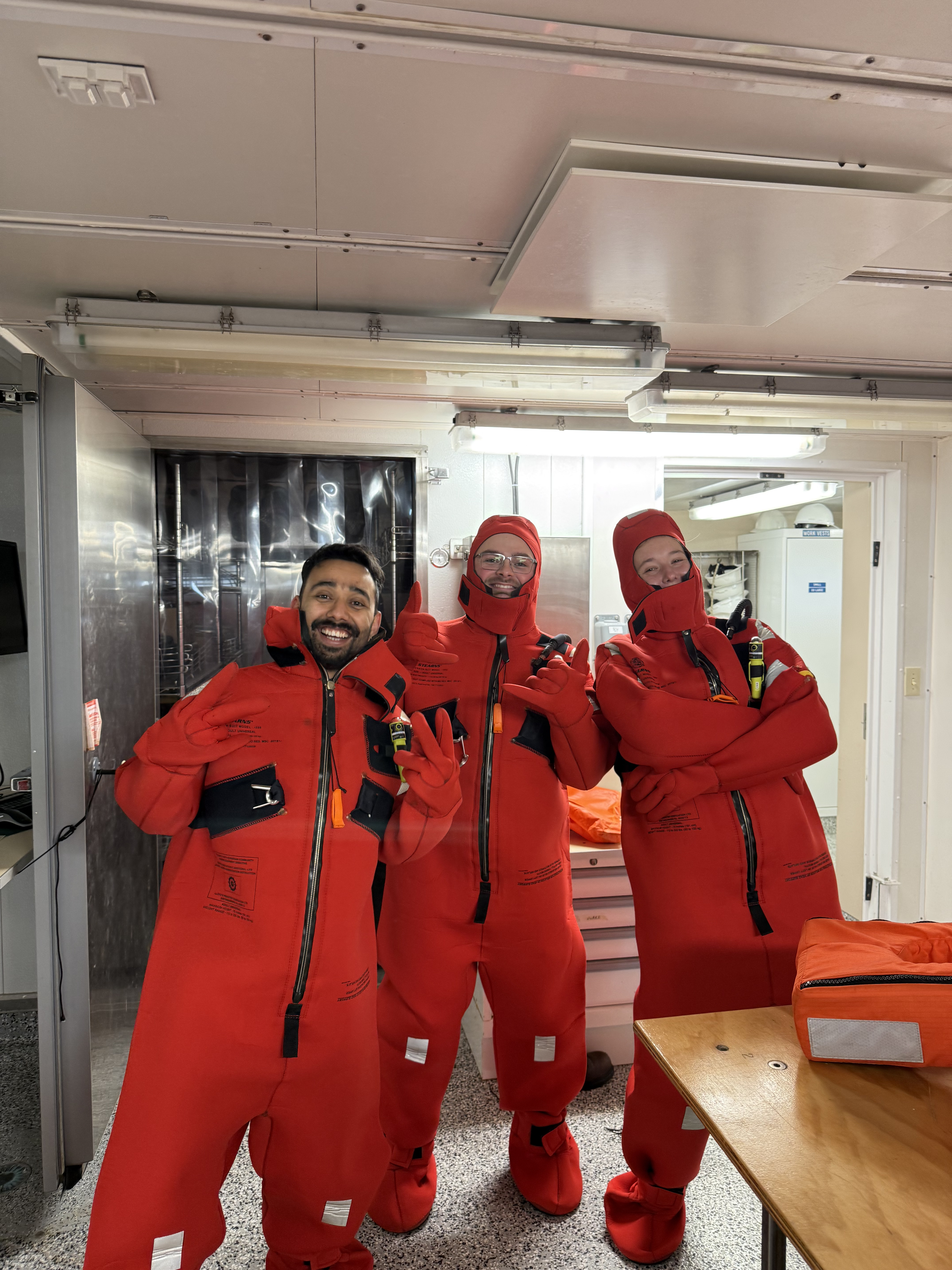
For 3 days this September, two EPS graduate students Kain Lager-Lowe and Maddie Hurd working under Associate Professor Lindsay Lowe-Worthington, set sail aboard Scripps Institution of Oceanography research vessel, the R/V Sally Ride, on its recent voyage off the coast of Washington and Oregon. This expedition is part of the CHINOoK (Cascadia Hydrothermal Circulation IN Oceanic (K)rust) project, an ongoing NSF-funded study investigating how fluid circulation in the oceanic crust influences thermal processes as it enters the Cascadia subduction zone.
The Cascadia subduction zone, traced by the Cascadia trench, is the site where the Juan de Fuca Plate is subducting beneath the North American Plate. This subduction zone is the focus of countless studies in part because of the major population centers that would be affected by seismicity associated with this subduction, as well as being used as a natural laboratory for understanding other subduction systems around the globe.
To understand what controls the seismicity in this area, it is necessary to have a complete understanding of subduction zone temperatures which can inform the general geometry of the seismogenic zone in this area. Fluid circulation plays a key role in transferring heat and can generate anomalies in heat flux along the sea floor. By collocating heat flux and seismic line deployments, more interpretation can be made relating to dynamic fluid circulation. By synthesizing results across many sites, the thermal state of the subducting plate can be better understood, and it can be determined if vigorous heat flux is limited to a given area or if it is ubiquitous across the zone.
2025’s expedition builds on the work of two previous cruises in 2022 aboard the R/V Langseth and in 2024, also aboard the R/V Sally Ride in collecting hundreds of kilometers of seismic reflection lines as well as heat flux measurements offshore of the Pacific Northwest. Part of this work was exploratory, taking high resolution bathymetry data and imaging and recording gravity anomalies and seamounts which are believed to be conduits for water exchange.
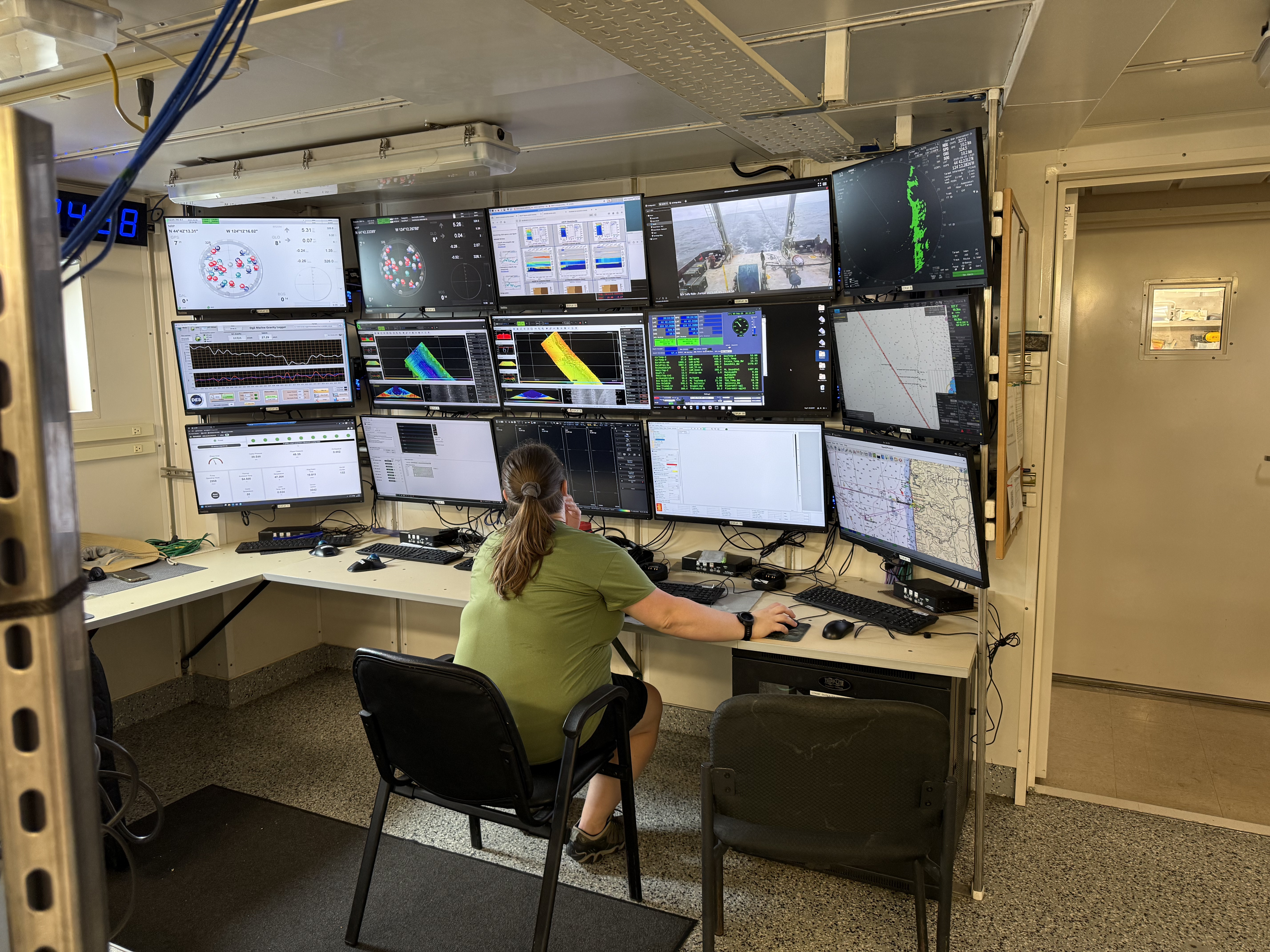
Shipboard monitors where researchers examine real-time data collected. Photo Credt: Maddie Hurd
Hurd and Lager-Lowe assisted in the deployment and recovery of seismic instrumentation and had the opportunity to watch high-frequency 2D multichannel seismic data collected in real time. “I am looking at multi-channel seismic reflection data for my research, but I have never seen it collected, and it was really exciting to see what goes into actually collecting the data,” Lager-Lowe reflects.
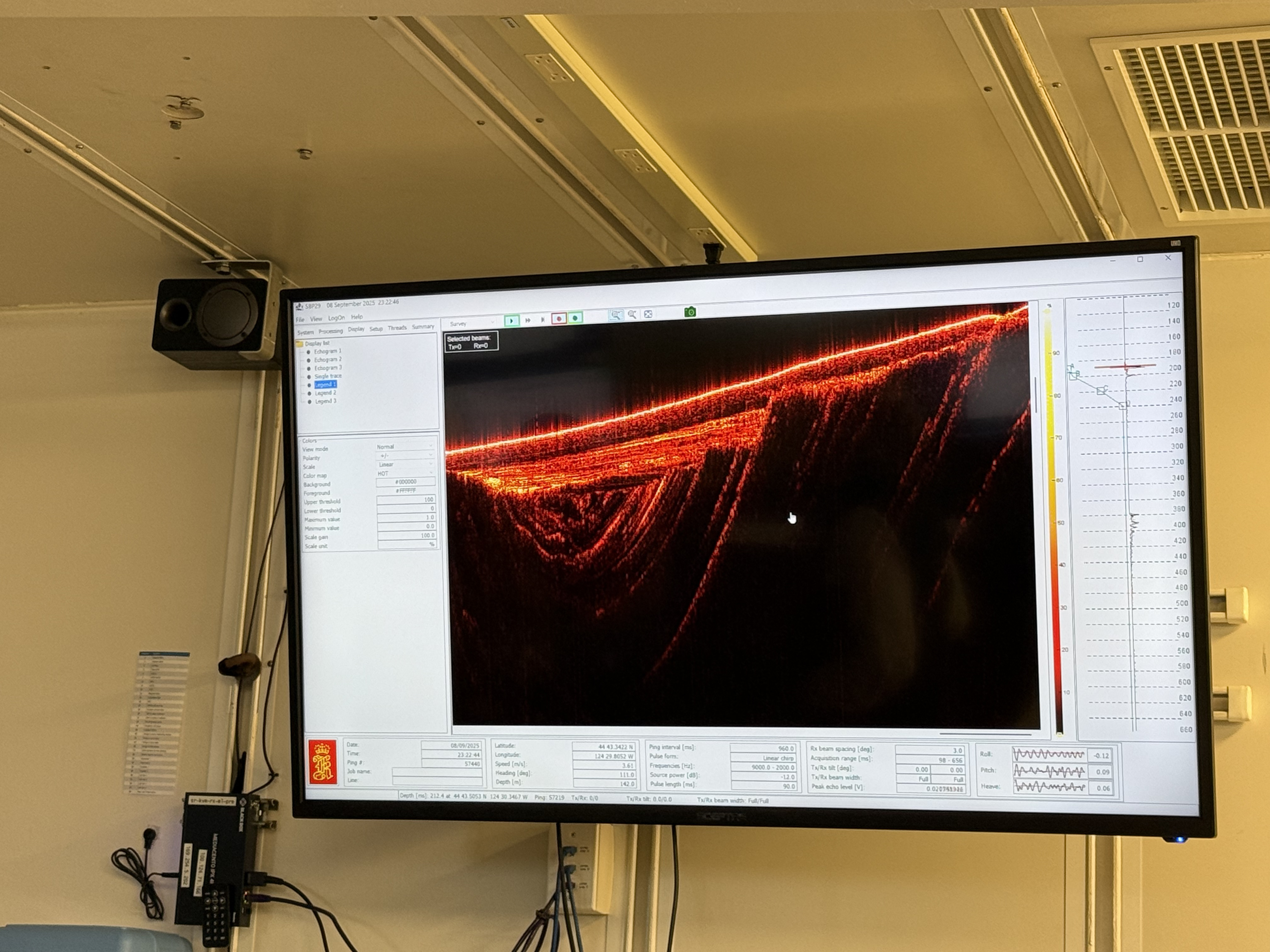
Subbottom profiler recording different strata making up the seafloor along cruise transect. Photo credit: Maddie Hurd.
“Talking to other people who do what I do and bouncing ideas around and getting advice was probably my favorite part of the experience” Hurd recounts. “In addition to other students, there were technicians that travel from ship to ship and do this all the time as well as legendary emeritus faculty who offered a lot of insight into the field. The friends, colleagues and collaboration of all these schools coming together is really cool.”
Since returning, Kain and Maddie are already gearing up for their next cruise off the coast of Mexico scheduled to set sail in December. When asked if they had any words for other students on their cruise, Maddie said
“If you ever have a chance to go on a cruise, you should do it!”